


 Migration is a phenomenon inherent to the history of mankind, which has shaped cultures, economies and political structures. Spain, like other European countries, has historically been both a sender and a receiver of migration. In recent decades, the arrival of migrants has driven important social and economic transformations.
According to the National Statistics Institute (INE), in 2024 foreign residents accounted for 16.6 % of the population, playing a key role in sustaining the labor market and the pension system. OECD (2025) indicates that more than 25 % of employment growth in the last two years was generated by migrant population, especially in sectors such as hospitality, care, construction and agriculture. Since 2022, 45 % of new jobs were filled by migrants, contributing to economic growth of 3 % in 2024, well above the Eurozone average. The Bank of Spain has pointed out that without this contribution, population growth would have stagnated and the welfare system would be unsustainable.
This panorama reinforces the need to position migration policies as a strategic axis, not only as a response to emergency situations, but also as a planning tool aimed at economic development, social cohesion and democratic sustainability.
Some countries have designed effective models that can serve as a reference. Canada and Australia, for example, use point systems that prioritize training, work experience and market needs. These models have improved the labor market insertion of skilled migrants, reduced unemployment among this population and raised their incomes, with positive effects for the economy. During the first half of the 20th century, the United States also integrated massive migratory flows from Europe as part of its industrial expansion. More recently, Germany has promoted dual training as a way of integrating migrants into key productive sectors.
These experiences show that effective migration policies are those that anticipate, plan and include. In contrast, restrictive models have proven to be counterproductive. France, with a more securitarian approach in recent years, has seen an increase in social exclusion, segregation and xenophobic discourse. At the European level, the approach focused on border control and the externalization of responsibilities, such as the Dublin system, has overburdened countries such as Spain, Italy or Greece without ensuring fair redistribution or effective reception mechanisms.
Within this framework, Spain needs to move towards a planned, fair and sustainable migration model, based on principles of inclusion, social justice and co-responsibility. Aligning migration policy with the needs of the labor market, preventing both labor shortages and the precariousness of migrants. 2. Guarantee legal and safe entry channels, reducing the power of trafficking networks and promoting orderly migration. 3. Strengthen reception and inclusion programs, with access to rights, decent employment, education and housing. 4. Combat discrimination and hate speech, through awareness campaigns and regulatory frameworks that promote a positive narrative about the migrant contribution.
An effective migration policy has a direct impact on economic growth, the sustainability of the welfare state and the quality of democracy. It is not a marginal issue, but a structural component of national development. Well-managed migration is a source of innovation, demographic revitalization and cultural enrichment.
It is essential for Spain to move towards a concerted State policy, with the participation of political and institutional actors at all levels. At the same time, it is necessary to promote a critical review of the migratory agreements within the European Union, promoting a more supportive and co-responsible approach. This effort is key to preventing more complex social fractures, such as those already observed in other countries of the bloc.
In closing, I suggest understanding the new migratory dynamics in the light of global changes. Human mobility in the 21st century responds to structural causes such as inequality, conflict, climate crisis or demographic transformations that must be addressed from an integral, human and prospective perspective. To bet on well-managed migration is to bet on a more cohesive, just and future-ready society.
Dr. Elena Estaba Briceño
August 2025

 As a teacher, consultant and trainer of generations, I ask myself: how can we incorporate AI without our students losing their capacity for reasoning, logical thinking and interest in research and reading, and how can we teach them to think in an era where machines already answer for us?

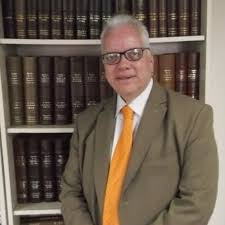 The history of humanity is, in large part, the history of its migrations. However, in the contemporary world, the phenomenon of migration has been progressively hijacked by narratives that simplify, distort and manipulate it. Instead of understanding its root causes or assuming our collective responsibility, we have opted for fear, criminalization and exclusion.

 It is not possible to remember everything, nor to forget completely. Every act of remembering also implies an act of forgetting. While this happens on the individual level, where remembering is always a selection, conscious or not, it also happens on the social level. Thus we speak of collective memories, as if human groups were capable of remembering or forgetting in a unified way. But even those who lived through the same episode, side by side, do not remember it identically. Their memories diverge, fragment, contradict each other. Yet we continue to speak of a "social memory" as if it were natural and homogeneous, without asking ourselves how it really works.

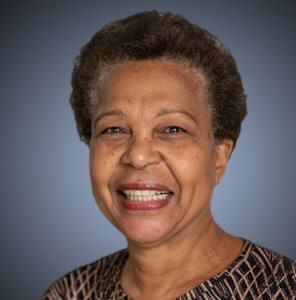 The methodology of research for social transformation is distinguished by a deep and active commitment to generating positive and significant changes in society. Unlike traditional research, which often focuses on theoretical understanding or description of phenomena, this methodology prioritizes action and tangible improvement of the living conditions of people and communities, especially those in vulnerable situations.

 Today's society is moving fast, but not always in the right direction. In the name of innovation and immediacy, we are leaving behind those who have the most to contribute: our seniors. And it's not just about affection or family ties, but also about the place occupied - or no longer occupied - by professionals with decades of experience in their fields.

 Research is not just a tool for understanding the world: it is a powerful way to transform it. Throughout my experience, I have found that data, when collected rigorously and interpreted with social sensitivity, can open unexpected paths, give voice to the invisible and generate concrete solutions to our societies' most pressing challenges.