


Christmas is a season that arouses emotion, it means different things to each one of us, and that is precisely where its richness lies. Recognizing the plurality of meanings that each person gives it from their own history. In our traditions are linked memories that accompany us all our lives: the smells of the kitchen, the melodies that each year sound in the background, the embrace of those who are no longer with us but who return in the form of shared stories and anecdotes. Remembering is also celebrating, thanking and recognizing that the bonds we have woven are still alive in our emotional memory. In times of accelerated changes and social and economic challenges, Christmas goes beyond a repeated ritual, it invites us to look inward and ask ourselves what sustains us, what values move us, what relationships strengthen us and what dreams we want to make come true.
For some people it is family, celebration, reunions and laughter around a table. For others, it is nostalgia, memory and silence. For many, it is a time of faith and gratitude and for many others, a period in which loneliness and absences weigh a little more than usual.
Christmas is not only a personal time, it is also a social space. Getting together does not necessarily mean big parties; it can be the simple gesture of a call to someone who is far away, a pending conversation, a shared cup of coffee. These are gestures that say: “I am here”. In a society that currently pushes us towards individualism, this time reminds us that we do not walk alone, that we are a community, a network of support and mutual care. This time invites us to look beyond our affective boundaries, to recognize the neighbor, the migrant, the grandparent who lives in loneliness, the one who is going through an illness or an economic hardship. No celebration is complete if we forget the empathy that is the bridge that allows us to see the humanity of the other.
This is also the time to imagine new beginnings. Calendars are renewed and with them the possibility of dreaming differently. Hope is not naivety; it is the ability to see the light even in complex moments. It is the belief that there is a kinder, fairer and more humane tomorrow. Every smile we give, every act of solidarity, every word that reconciles is a seed and Christmas offers us the fertile time to sow it. Hope has many forms: it can be the desire for greater family peace, the illusion of a personal project that is opening up, the conviction that wounds also heal and that relationships can be reunited.
For those who live Christmas in faith, this time brings with it the message of love that is present and life that is renewed. But even beyond religious beliefs, there is a lay spirituality that this time awakens: the search for meaning, the need for hope, the desire for peace in our lives and in our societies.
Christmas is also about asking ourselves how we can be a mirror of goodness for those around us and how we can bring light within our possibilities, from a simple gesture to a decision that transforms. It is a reminder that making the commitment to build a better future begins with small steps that are within our reach.
Today, when distances feel shorter thanks to technology, but emotional disconnections seem to be deeper, perhaps it is more necessary than ever to ask ourselves what is essential to us, what deserves our time and attention.
May this December not be measured only in purchases or commitments, but in authentic encounters. May we give less things and more company, less haste and more listening, less perfection and more genuine affection. Christmas can be an opportunity to slow down, to reconnect with what is important and to understand that happiness is nourished by real bonds and gestures that come from the heart.
Finally, we can say that for us, Christmas is a profound act of humanity and gratitude. Acknowledging others, opening spaces of affection, reaching out and sharing life. It is there, in these small daily actions, where Christmas reveals its transforming power. Let us remember that hope is still alive, that love is still our greatest driving force, that every life deserves dignity and that solidarity makes us a community. In a world that is sometimes filled with uncertainty, Christmas reminds us that there is always an opportunity to unite, to heal and to build together a more just, more empathetic and brighter future.



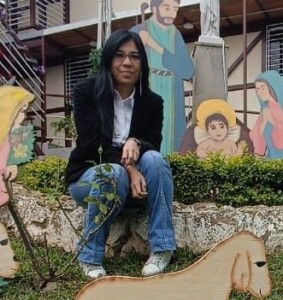

Josefa Orfila - Adelaida Struck - Rita Amelii - Mony Vidal - Francisco J Fernandez


 Artificial intelligence (AI) has become one of the most profound technological transformations of our time. Its ability to process data, generate answers and support decision-making in multiple fields, such as medicine, education, business management or scientific research, opens up possibilities never seen before.
 SOCIO-AFFECTIVE DEVELOPMENT IN THE FIRST FIVE YEARS OF LIFE, THE INVISIBLE FOUNDATIONS OF THE HUMAN BEING
 In modern pediatric practice, it is becoming increasingly evident that the quality of care depends not only on diagnosis or treatment, but also on how the child is involved in decisions that affect his or her body and well-being. Listening to them, informing them and allowing them to participate is not a gesture of courtesy, but a clinical, ethical and emotional necessity that strengthens trust, improves therapeutic adherence and reduces anxiety. Understanding the child as an active subject of his or her own health process is a decisive step towards truly humanized care.
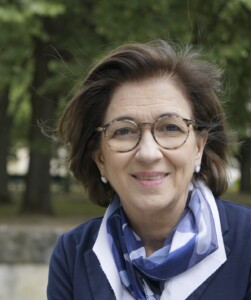 For centuries, conflicts have been interpreted, confronted and resolved - or aggravated - from the traditional zero-sum view in which someone has to win by force or imposition. Women, historically removed from the formal spaces of negotiation and decision-making, have instead exercised an often invisible mediation: that which takes place in communities, in homes, in family ties.
 At the crossroads of the 21st century, we can say that humanity faces challenges that demand bold and transformative responses. The climate crisis, social inequality and energy precariousness call for an ethical look at the development model. In this context, the energy transition is not only an environmental imperative, but also represents an unprecedented opportunity to rethink global welfare from a social justice perspective.
 Migration is a phenomenon inherent to the history of mankind, which has shaped cultures, economies and political structures. Spain, like other European countries, has historically been both a sender and a receiver of migration. In recent decades, the arrival of migrants has driven important social and economic transformations.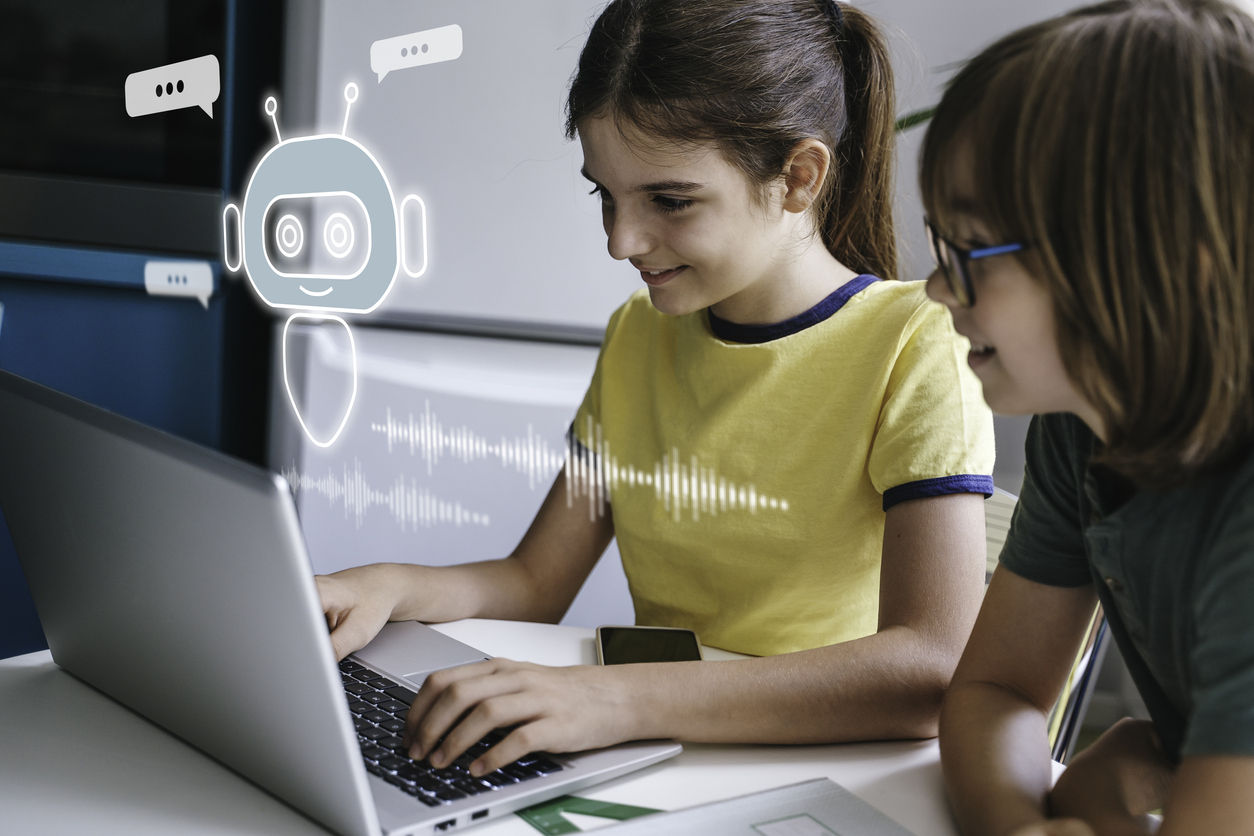
 As a teacher, consultant and trainer of generations, I ask myself: how can we incorporate AI without our students losing their capacity for reasoning, logical thinking and interest in research and reading, and how can we teach them to think in an era where machines already answer for us?
 The history of humanity is, in large part, the history of its migrations. However, in the contemporary world, the phenomenon of migration has been progressively hijacked by narratives that simplify, distort and manipulate it. Instead of understanding its root causes or assuming our collective responsibility, we have opted for fear, criminalization and exclusion.