

Archive for the
'Health' Category


Polarization and the loss of spaces for listening are weakening the collective. When dialogue breaks down, coexistence is fragmented and public and organizational decisions are impoverished. In this Let's talk about, we reflect on the urgency of rebuilding spaces of encounter, recognition and mediation, taking human diversity as the basis for strengthening social cohesion in increasingly complex contexts.


In recent years, social dialogue has become increasingly fragile. Positions are hardening, differences are becoming more radical and spaces for listening are shrinking. Polarization not only permeates politics, but also social relations, organizations, communities and decision-making processes. In this context, sustaining the collective becomes one of the greatest challenges of our time.

When dialogue breaks down, the first thing that suffers is trust. Mistrust of others who think differently or of those who come from a different experience or context weakens bonds and fragments coexistence. In polarized societies, disagreement ceases to be an opportunity for construction and becomes perceived as a threat. The result is an impoverishment of public debate and an increasing difficulty in reaching minimum consensus.

This breakdown in dialogue has profound consequences. In the field of public policy, it results in decisions that are disconnected from social realities or in measures imposed without legitimacy. In organizations, it generates tense work climates, blocks collaboration and hinders conflict management. In communities, it erodes the sense of belonging and reinforces dynamics of exclusion and isolation.

One of the most frequent mistakes in the face of polarization is to try to avoid conflict. However, conflict is not the problem in itself. Diverse and complex societies are, by definition, scenarios of different interests, visions and needs. The real problem arises when there is a lack of tools to manage these differences constructively. Where there is no dialogue, conflict becomes chronic or is expressed violently, symbolically or silently.


Sustaining the collective in polarized contexts requires, in the first place, recognizing diversity as a constitutive fact of social life. It is not a matter of seeking artificial unanimity, but of generating conditions in which differences can be expressed, heard and dealt with. Dialogue does not eliminate tensions, but it makes it possible to transform them into possible learning and agreements.

In this sense, meeting spaces play a central role. They do not arise spontaneously nor are they maintained by inertia; they require design, care and political and institutional will. Dialogue roundtables, participatory processes, mediation and community dynamics are key tools for rebuilding trust and strengthening the collective. Their value lies not only in the concrete results they generate, but in the very process of listening and mutual recognition.

Another fundamental element is active listening. Listening implies much more than hearing; it implies being willing to understand the other's point of view, even when it is not shared. In polarized societies, listening becomes a profoundly political and ethical act. It allows us to humanize the other, to break stereotypes and to open cracks in closed discourses.

Likewise, sustaining the collective requires leadership capable of facilitating dialogue, not exacerbating confrontation. Leading in these contexts implies moderating, mediating and building bridges, even when this does not always generate immediate consensus or quick results. It is a leadership that is committed to long-term processes and to building trust as the basis for coexistence.

Finally, it is important to say that the collective is not a given state, but a permanent construction. It is strengthened when there are clear rules, channels of participation and an ethic of recognition. It is weakened when imposition, exclusion or silence prevail. In times of polarization, caring for the collective is not a naïve gesture, but an essential strategy for social sustainability.

Recovering the word, listening and encounter is a necessary condition to face contemporary challenges and to build more cohesive and just societies, capable of living together in diversity.


Asesórate Management Team
READ MORE →

In modern pediatric practice, it is becoming increasingly evident that the quality of care depends not only on diagnosis or treatment, but also on how the child is involved in decisions that affect his or her body and well-being. Listening to them, informing them and allowing them to participate is not a gesture of courtesy, but a clinical, ethical and emotional necessity that strengthens trust, improves therapeutic adherence and reduces anxiety. Understanding the child as an active subject of his or her own health process is a decisive step towards truly humanized care.
The Convention on the Rights of the Child, adopted by the United Nations in 1989, enshrines the child's right to be heard and to have his or her views taken into account in accordance with his or her age and maturity. This principle, known as the right to participation, is not limited to school or social life: it also extends to the health field. Allowing a child or adolescent to intervene in decisions about his or her health means recognizing him or her as a person with a progressive capacity to understand, give opinions and make decisions. This does not imply transferring adult responsibility, but accompanying their process of understanding and autonomy with empathy and accessible language.
Studies in pediatric psychology show that when children are actively involved in choosing tests or treatments, they experience less anxiety and a greater sense of control. That sense of control contributes to their emotional and physical well-being, and has a direct impact on treatment adherence. In other words, the child who understands what is happening to him and feels that his opinion matters cooperates better, recovers more serenely and develops a positive attitude toward medical care.
In the clinical setting, three concepts are used that must be understood in a complementary manner: parental permission, child assent and mature adolescent consent. Parental permission is the legal authorization given by the representatives. Assent, on the other hand, is the affirmative agreement of the child, depending on his or her degree of understanding. It is not a signature on a piece of paper, but a process of dialogue in which the physician explains, answers questions and validates the child's understanding. Finally, consent is applied when the adolescent demonstrates sufficient maturity to understand the implications of his or her decision and can assume it responsibly. This scheme seeks to balance respect for family authority with the progressive autonomy of the minor.
The role of the pediatrician and the healthcare team is essential for this participation to be real. It involves talking to the child in a language he/she can understand, using visual aids or everyday examples, and allowing him/her to express doubts or fears. It is not enough to explain: it is necessary to verify understanding, give space for questions and offer alternatives whenever possible. Participation should be gradual and adapted to age: in preschoolers it can focus on simple choices («do you want me to listen to your chest or your back first?»); in schoolchildren, on concrete decisions and more detailed explanations; and in adolescents, on conversations where they can become involved in an informed and responsible way.
When the child feels that his or her voice counts, the dynamics of the therapeutic relationship change. They are no longer «obedient patients», but active participants in their own care process. This approach strengthens the alliance between doctor, patient and family, favors communication and reduces conflicts arising from fear or misunderstanding. In addition, it prepares children for self-management of their health in adult life, an essential learning in times when medical information is available to all, but critical understanding remains a challenge.
Respecting children's right to participate in decisions about their health is a concrete way to promote their overall well-being. It involves recognizing that they are capable of thinking, questioning and deciding within the limits of their maturity. Every consultation conversation can be transformed into an educational, emotional and ethical opportunity to teach them how to take care of themselves. Listening to them is not only a professional duty: it is a way to build confidence, alleviate fears and prepare citizens who are more aware and responsible for their own bodies.
Today's pediatrics is not only measured in technological advances, but also in the ability of professionals and families to listen and accompany with respect. Allowing children to participate in the decisions that concern them is to lay the foundations for a more solid emotional health and a more empathetic society. Caring for them also means giving them a voice. This is the medicine that heals and teaches: the one that turns each consultation into a space of trust, dialogue and shared growth.


J. Planchet

READ MORE →

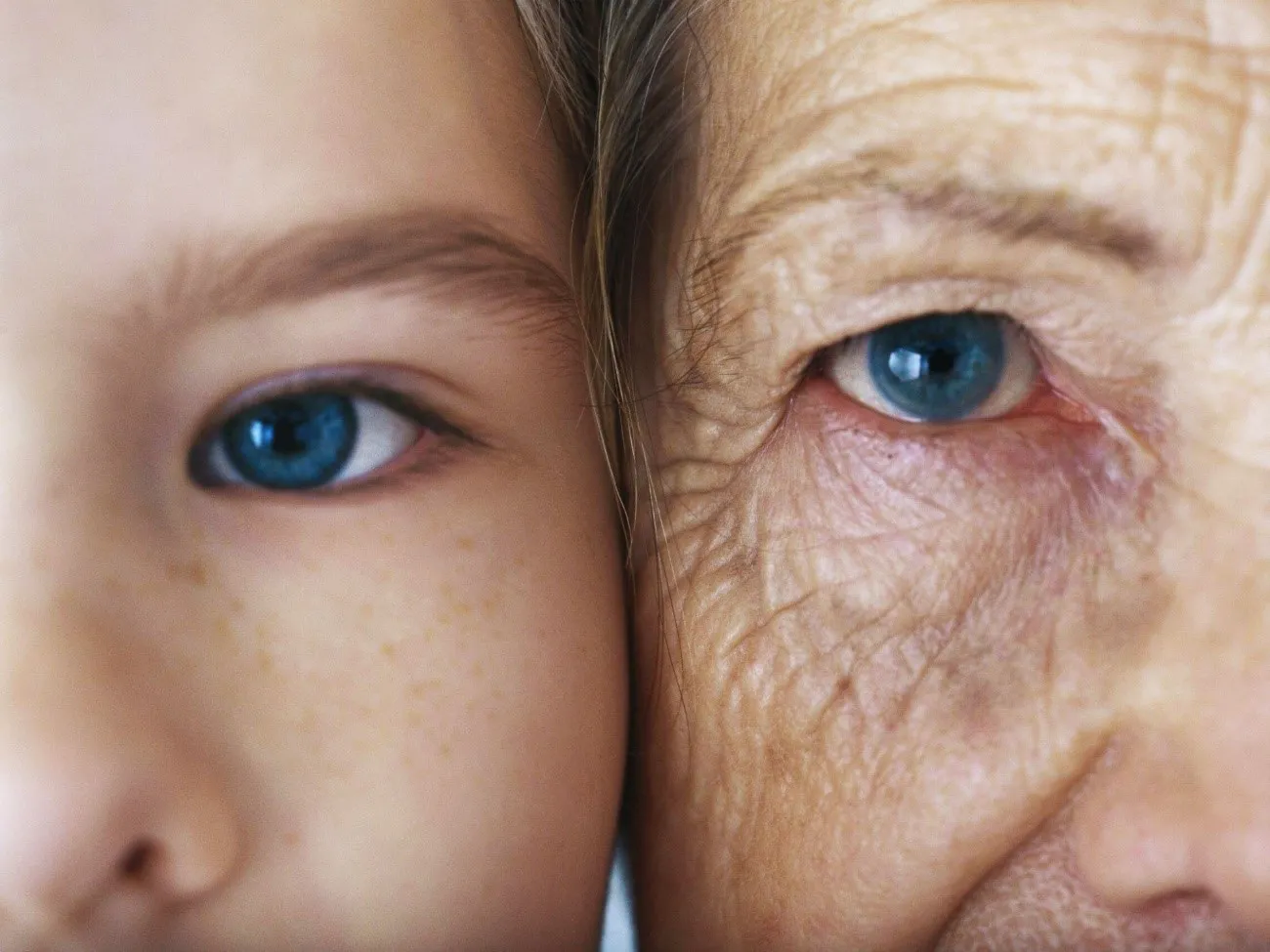
Adelaida StruckToday's society is moving fast, but not always in the right direction. In the name of innovation and immediacy, we are leaving behind those who have the most to contribute: our seniors. And it's not just about affection or family ties, but also about the place occupied - or no longer occupied - by professionals with decades of experience in their fields.
Today, many men and women with valuable careers, who have built knowledge, who have led processes, who have formed generations, are made invisible simply because they have crossed a certain age. Age exclusion has become a new form of silent discrimination, disguised as modernity. Thus, not only the voice of those who have much to say is lost, but also the possibility of building real bridges between generations.
Instead of connecting younger people with older adults, of generating spaces for feedback, we are sowing a gap that impoverishes everyone. Young people need references, accompaniment, stories that teach them to interpret the complexity of the present. And the elderly need to continue contributing, to feel part of it, to be recognized for their value.
It is not about charity or nostalgia. It is about a strategic vision of the future. Because a society that does not listen to its elders is disconnected from its history, its ethics and its accumulated experience. And a youth that walks alone, without dialogue with those who have already walked the path, runs the risk of repeating mistakes and losing depth.
From our point of view, it is urgent to reconnect the elderly with their communities, with their colleagues, with the spaces where they can continue to build meaning. It is not enough to include them: they must be integrated with respect and admiration. We must create opportunities for active participation, intergenerational exchange and the valorization of lived knowledge.
Age should not be a limit, but a possibility to generate synergies. To bet on connection is to bet on a wiser, fairer and more humane society.


Adelaida Struck G.

READ MORE →

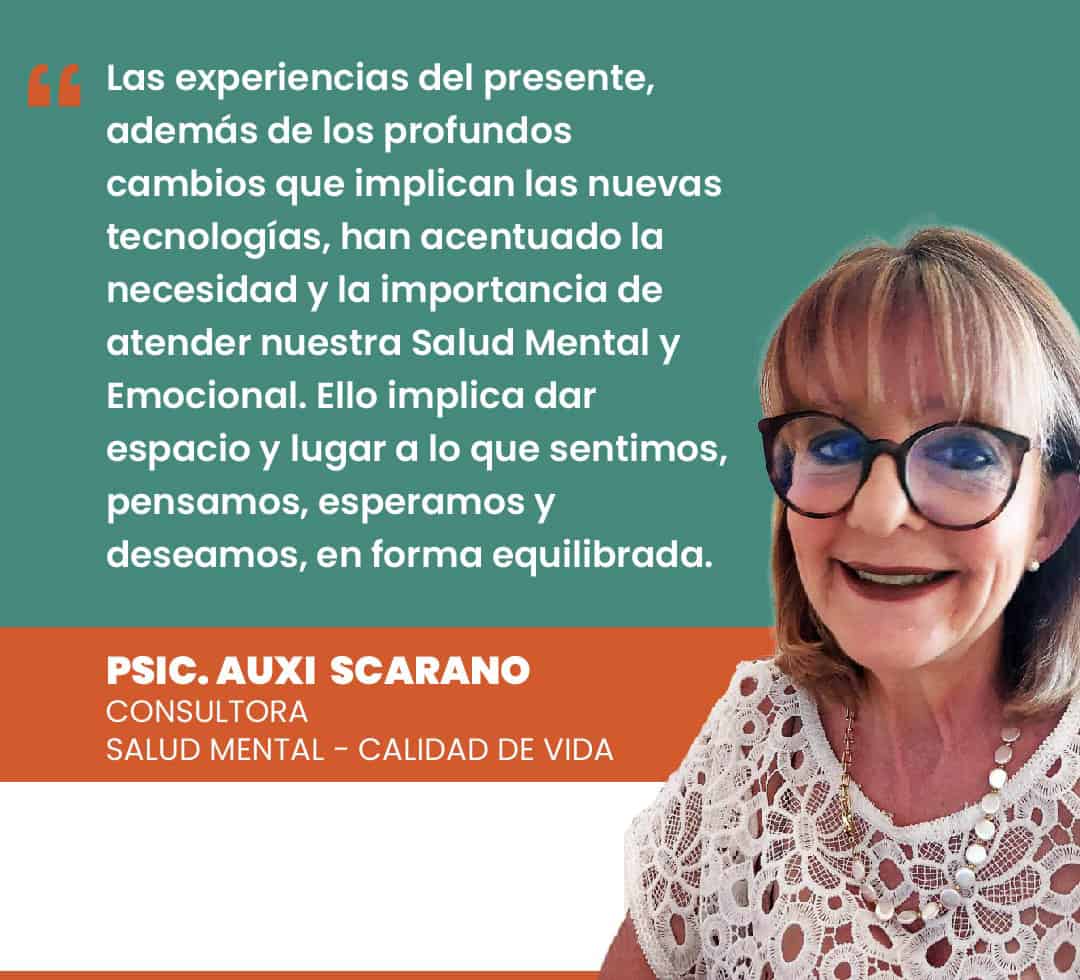
The experiences of the present, in addition to the profound changes that new technologies imply, have accentuated the need and the importance of attending to our Mental and Emotional Health. This implies giving space and place to what we feel, what we think, what we expect and what we want, in a balanced way, combining it with reality and the circumstances that we have to live.

The post-pandemic readjustment, the adaptation to constant uncertainties, the focus on consumerism, the time submerged in digital social networks, the alarming news, the over-demanding online employment modalities, questioned love, the society of fatigue or emptiness, they promote immediacy, superficiality, banality and exaggerated positivism or pessimism, taking away depth and responsibility from what it means to live and build a good quality of life. Consequently, the risks of physical, mental and social illness are accentuated.

It is urgent to become aware, be it in families, schools, companies, institutions and the media, to attend to the mental and emotional health of the members of society. Such an action that implies educating, guiding, caring and providing attractive and creative models, to take care of mental health, the ability to think sensibly, as a requirement to build and care for our quality of life.

Activities and proposals that stimulate attending to emotions: knowing how to observe them, listen to them, recognize them, nominate them, regulate them, manage them and communicate them. Identify how they affect our behaviors, learning, decisions, performance and work performance, our productivity and economy. Admit that we are essentially mind and emotions, that we start from them to be and exist, to aspire and progress, so that we have a life with meaning, projects, illusions and that it is well worth living. It is then time for all of us to strive to build quality of life, to develop the healthy society that we deserve.


This subject dealt with by our consultant Auxi Scarano is part of the research, areas of competence and training courses offered by Asesórate.

READ MORE →