
Lifelong learning: the new key to not falling behind
|
In a world like the one we live in, where artificial intelligence, technology, and job changes are advancing at a rapid pace, learning is no longer a stage of life; it's a permanent necessity. Today, staying up-to-date doesn't depend on age, but on the willingness to adapt, relearn, and transform experience into a tool for continued personal and professional growth. |
For a long time, society taught us that learning had defined stages. First, we studied, then we worked, and then came a stage of stability where the acquired knowledge seemed sufficient for a lifetime. However, today's world has profoundly changed that logic.
Today, we live in a reality marked by technological, economic, and social transformations that are evolving at an unprecedented speed. Artificial intelligence, automation, new work models, and digitalization are changing professions, routines, and ways of relating to each other. In this context, learning has ceased to be an activity limited to youth and has become a lifelong necessity.
The idea of “I've already studied, I've already trained” is starting to lose meaning. Every day new tools, new work dynamics, and new forms of communication emerge that demand constant updating.
However, this phenomenon should not be understood as pressure or a threat. It is an opportunity to reinvent oneself, discover new skills, and remain intellectually and socially active.
One of the biggest current challenges is the fear of being left behind. Many people feel insecure about technological changes because they perceive that the world is moving too fast. This feeling particularly affects those who believe that learning new digital tools or adapting to new work dynamics belongs exclusively to younger generations. However, accumulated experience still holds enormous value.
Continuous learning doesn't mean constantly starting from scratch, but rather integrating new knowledge with previous experience. Human skills such as analytical ability, empathy, communication, critical thinking, and problem-solving remain fundamental and are difficult to replace. What changes is the need to complement them with new competencies that allow one to navigate different scenarios.
Furthermore, learning not only has work implications. It also strengthens autonomy, self-esteem, and social participation. Various studies have shown that people who maintain active learning processes develop greater emotional adaptability, improve their confidence, and preserve their cognitive abilities more robustly.
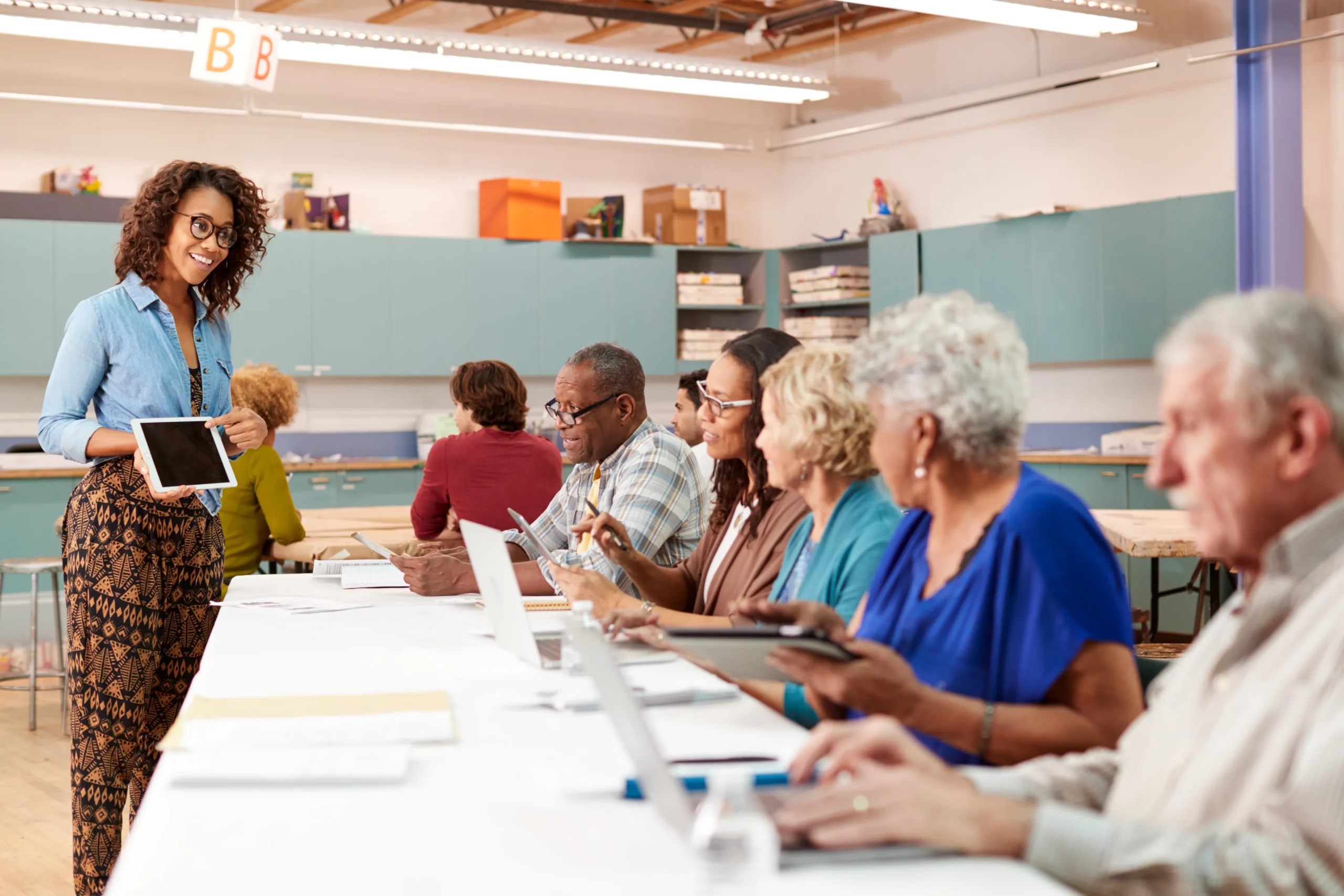
This cultural shift also forces us to rethink how we understand age. For years, it was assumed that certain stages of life were associated with productivity and others with retirement or passivity. Today, we observe a different reality. People in their 50s, 60s, and older continue to pursue education, start businesses, participate in projects, and learn new technological tools. Contemporary longevity is transforming the relationship between age, knowledge, and social participation.
However, it must be considered that not everyone has the same opportunities to access update and training processes. Economic, educational, and technological gaps can lead to exclusion. Therefore, one of the major current social challenges is to democratize access to knowledge and promote accessible, flexible, and inclusive learning spaces.
It's also important to understand that learning doesn't always mean accumulating degrees or certifications. It often involves developing new ways of thinking, broadening perspectives, questioning habits, or incorporating practical life skills. Learning can be listening, observing, conversing, researching, and maintaining intellectual curiosity about the world.
In times when information changes rapidly, adaptability has become one of the most valuable tools for facing uncertainty. Societies that encourage lifelong learning will be better prepared to respond to the technological, economic, and human challenges that characterize this era.
Perhaps the biggest change isn't technological, but cultural. Lifelong learning implies accepting that we never stop transforming. It means understanding that experience and updating are not opposites, but complementary. And, above all, recognizing that remaining open to learning is a way to continue actively participating in the present.
In a constantly changing world, the real advantage won't always be knowing more than others, but being willing to keep learning.
Asesórate Management Team