
Author Archive


After a traumatic event, it's normal to experience anxiety, fear, and uncertainty. Understanding our emotions and learning to regulate them is crucial for promoting recovery. Positive emotions, social support, self-care, and setting small goals help strengthen resilience and regain hope. This article offers practical tools to navigate our emotions and rebuild, step-by-step, a life project with meaning and well-being.


When we experience a major life event, losses can leave a deep void. In these circumstances, it is common to experience what is known as post-traumatic stress, which can cause our bodies to remain in a state of hyperactivation, with constant worry and intense fear. All of this deregulates our emotions and can manifest as anxiety about what happened, about what we feel, and about what we believe may happen.

Anxiety is the most common and universal of emotions. It is a reaction of tension, without apparent cause, more diffuse and less focused than fears. It is important to understand that anxiety is a normal sensation or emotional state in certain situations and that it constitutes a usual response to different stressful everyday situations, but when it appears after a traumatic event, we need to help ourselves control it.

Anxiety tests our emotional regulation skills, which is the ability to manage and balance both negative and positive emotions.

Both types of emotions contribute to personal development and coexistence. They are activated by our thoughts, lived experiences, memories, and various stimuli. The complementarity and proportionality between positive and negative emotions form the foundation for problem-solving, maintaining healthy relationships, and strengthening resilience.

Negative emotions, such as fear, sadness, anger, guilt, or shame, are not «bad»; they are adaptive responses to threats or dangers. However, when they persist over time, they reduce our range of responses and promote pessimistic thinking, creating a «downward spiral.» Their function is to detect threats, mobilize action, and coordinate our relationships.

In contrast, and as a necessary complement, positive emotions such as joy, serenity, interest, pride, amusement, inspiration, and wonder help to minimize and resize the impact of negative emotions, acting as true «buffers.» They are the key ingredient for recovery and subsequent flourishing, while always maintaining contact with reality. While negative emotions alert us and narrow our focus of attention, positive ones broaden our perspective and foster the construction of solutions.

In the days following a traumatic event, when the emotional impact is raw, it is crucial to recognize our own reactions to different stimuli, identify and manage negative emotions, and at the same time, try to generate positive emotions through small pleasant moments or by recalling significant memories. All of this will help us plan our day-to-day activities and gradually regain hope and our life project.

Here are some recommendations for moving from impact to hope:

  • Foster your secure and supportive social connections, as having support reduces the risk of continued anxiety associated with the event you experienced. Try to share a moment with others daily.
  • Practice daily gratitude. For example, keep a brief journal of three significant things that happened during the day. This exercise helps counteract the tendency to focus attention solely on threats.
  • Foster hope through small, achievable goals that allow you to regain a daily routine. Having a sense of direction reduces feelings of helplessness and promotes healthier coping.
  • Identify your personal strengths and use them intentionally in daily activities, both to take care of yourself and to help others.
  • Incorporate brief breathing, relaxation, and emotional regulation exercises as part of your self-care, especially when the feeling of hyperactivation is intense.
  • It favors activities with meaning, purpose, and commitment. Well-being does not depend solely on reducing symptoms, but also on rebuilding a valuable and meaningful life.
  • Moderate your news consumption and identify moments of mental rumination. Replace them with self-care activities such as walking, visiting a loved one, cooking, or doing something you enjoy.

As a final approach, remember that life is a permanent challenge, to continuously develop our resources to become increasingly resilient, as well as to build an appreciative attitude towards all the personal and relational resources we have.
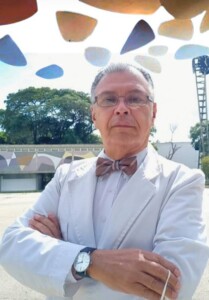
Dr. Maria Elena Garassini
READ MORE →
 

Natural disasters profoundly affect children's physical and emotional health, requiring comprehensive care that combines medical assistance, protection, nutrition, and psychological support. Shelters must provide safe spaces that preserve their well-being and development. Children's resilience should not mask their vulnerability. Protecting their childhood demands specialized protocols that guarantee safety, educational continuity, and recovery centered on their needs.


The care of children in natural disasters demands a comprehensive approach that prioritizes basic survival and emotional containment. As pediatricians, our daily work involves protecting the development, health, and smiles of childhood. However, when a natural disaster or humanitarian emergency strikes a community, our role drastically transforms.


In those critical moments, consultative medicine gives way to trench medicine, where it is essential to guarantee water, shelter, hygiene, and health, apply psychological first aid, maintain family unity, and establish strict registration protocols to avoid the risk of trafficking and vulnerability. From my perspective on the front lines of care, crisis management reveals two parallel realities: the fragility of the response infrastructure and the touching, even painful, naivete of children in the face of adversity.


When a disaster strikes, the first line of medical defense shifts to local hospitals and health centers, which often become overwhelmed immediately—even more so in Latin America, where 70% of hospital facilities are located in high-risk areas. Children arrive with physical injuries, severe dehydration, or exacerbations of chronic illnesses caused by interruptions in their treatment. The initial priority is physical stabilization. However, the real challenge arises in the days that follow, when the initial chaos subsides and the emotional impact becomes evident.


Temporary shelters represent an extremely complex scenario. Although these spaces are established with the intention of providing shelter, food, and security, the reality is that they often become focal points of vulnerability for the youngest. The lack of optimal sanitary conditions leads to the rapid spread of respiratory and gastrointestinal infections. Furthermore, overcrowding and the loss of family privacy create an environment of chronic stress. In shelters, pediatric care cannot be limited to prescribing medication; it must focus on public health, nutrition, and, urgently, on creating safe play spaces that restore a sense of normalcy to their lives.


Amidst this desolate landscape, what is most striking is the attitude of the children themselves. There is a deep and innate naivete in childhood that manifests strongly during the worst crises. This naivete should not be confused with indifference or an absence of suffering. It is, in reality, a psychological defense mechanism, a natural armor that protects them from a reality their minds cannot yet fully process. While adults sink into anguish, uncertainty, and grief over material and personal losses, children possess an astonishing capacity to compartmentalize reality. For a young child, a shelter full of bunk beds and strangers can temporarily transform into an adventure camp. Therefore, in shelters, we must separate areas for children's recreation, breastfeeding, and spaces for quiet reflection, regardless of any religious beliefs.


Watching a child smile or play in a field hospital after surviving a catastrophe is a lesson in resilience, but also a heartbreaking reminder of their absolute dependence on the adult world. They blindly trust that authority figures, their parents, and medical personnel will resolve the situation. This is why it's important to avoid using schools as shelters as much as possible, as classes should resume as quickly as possible, all within the framework of the population's comprehensive recovery plan.


As a pediatrician, I understand that our greatest responsibility in disasters is to safeguard that innocence for as long as possible, using it as a bridge towards their comprehensive recovery. Emergency medical care must evolve towards a holistic approach that recognizes a child's health is inseparable from their emotional well-being. We need emergency protocols that prioritize the creation of child-friendly zones in every shelter and that train staff in pediatric primary psychological first aid.


Reconstruction after a disaster is not only measured in bricks and bridges, but in the ability to restore every child's right to remain a child, ensuring their innocence is a sanctuary of hope, not a condition of vulnerability.


Dr. Huníades Urbina-Medina, MD

READ MORE →
 

The double seismic event that occurred in Venezuela on June 24th left much more than material damage. It also awakened emotions, strengthened solidarity, and reminded us of the extraordinary resilience of the Venezuelan people. After the emergency begins an even greater challenge: rebuilding communities, recovering hope, and looking towards the future. In this task, each person, from their profession and experience, can contribute to the country rising again with greater strength.


The double seismic movement registered in Venezuela on June 24th reminded us, once again, that nature can transform our reality in a matter of seconds. Beyond the material damage, millions of Venezuelans experienced a shock difficult to describe. Those who were in the country experienced the impact of a phenomenon as unexpected as it was unsettling. Those of us living abroad shared the same anguish, trying to communicate with family and friends, hoping to receive the message we all wished to hear: «We are okay.».

Earthquakes don't just shake the earth; they also stir our emotions. They make us aware of our fragility and the importance of those around us. In moments like these, we understand that, above any differences, what is truly important are people.

But if there is something that profoundly characterizes Venezuelans, it is that we rarely remain immobile in the face of adversity. Almost instinctively, we begin to ask who needs help, to share information, to organize a collection, to open our homes, or simply to accompany someone going through a difficult time. Solidarity does not appear as a learned gesture; it is part of our way of understanding life and facing difficulties.

The first hours were marked by the response of emergency services, rescue teams, healthcare personnel, volunteers, and the support of numerous national and international organizations. Their swift action made it possible to save lives and alleviate immediate suffering. However, when the emergency concludes, a much longer and more complex challenge begins: reconstruction.

Reconstruction means more than just repairing homes, roads, or basic services. It means rebuilding trust, strengthening the social fabric, healing emotional wounds, and creating new opportunities for communities to look towards the future with hope once again.

In that task, there isn't a single dominant profession. Each discipline possesses knowledge and tools that can contribute to collective well-being.

Engineering and architecture help build safer infrastructure; economics drives the recovery of livelihoods; education restores stability to children and young people and offers spaces to learn and live together again.

Psychology plays an essential role in supporting those experiencing fear, anxiety, stress, or grief after an emergency. Caring for mental health is also rebuilding. Sociology and anthropology help us understand how communities react, how their support networks function, and what cultural strengths can become pillars of recovery. Listening to communities and respecting their identity allows for the construction of more humane and sustainable responses.

Art also has a lot to contribute. Music, literature, painting, theater, and photography help express emotions, preserve collective memory, and strengthen the bonds that unite people when they need it most. Likewise, universities, civil society organizations, research centers, businesses, and professional associations can add knowledge, innovation, and commitment to accompany this process.

Venezuelans know the value of solidarity well. Within and outside the country, there are thousands of people who feel the desire to contribute within their means. Some will do so through direct assistance; others by educating, researching, supporting communities, offering psychological support, promoting cultural initiatives, or developing local development projects. All of these contributions are equally valuable.

Perhaps one of the main lessons this double seismic event leaves us with is that cooperation remains our greatest strength. When knowledge, professional experience, and civic engagement come together, communities regain their ability to move forward more quickly.

There is also a very Venezuelan way of facing adversity. Even when fatigue and worry are evident, a smile, a word of encouragement, an outstretched hand, or a gesture of humor usually appears, helping to lighten the collective burden. It's not about minimizing suffering, but about expressing a profound will to move forward. This ability to overcome, to reinvent oneself, and to reach out to others constitutes one of the greatest strengths of our people.

Reconstruction doesn't end when the headlines disappear or when rescue operations conclude. It's a process that can stretch for years and requires perseverance, coordination, learning, and foresight. It also represents an opportunity to strengthen capacities and build communities better prepared to face new challenges.

After the earthquake, Venezuela needs to continue counting on everyone's solidarity. Every profession, every organization, and every citizen has something to offer. Because rebuilding a country isn't just about repairing what's broken. It means strengthening people, restoring hope, and reaffirming the conviction that by working together, it will always be possible to rise again.

Venezuelans did not choose for the earth to shake, but we can decide how to get back up after this jolt. Our history shows that, even in the most difficult times, we are capable of starting over with work, creativity, solidarity, and that smile which does not deny pain, but rather reflects the firm decision to keep building the country we all deserve.


Team

Asesórate Consultores Asociados

July 2026

READ MORE →
 

We live surrounded by news, videos, opinions, and messages that circulate at an unprecedented speed. However, being permanently connected doesn't always mean understanding the reality we live in better. In times of overinformation, learning to pause, analyze, and think critically has become a fundamental necessity to understand what is happening, make more conscious decisions, and build a more responsible citizenship.


Never before in history have we had access to as much information as we do today. News, images, videos, opinions, and analyses circulate constantly through mobile phones, social networks, and digital platforms. In a matter of seconds, we can learn about events happening anywhere in the world. However, this abundance of information does not necessarily translate into greater understanding.

We live in an era marked by speed. Information arrives continuously and at an accelerated pace, permanently competing for our attention. Brief headlines, content designed to go viral, and increasingly immediate messages shape the way we interpret reality. In many cases, we consume information without stopping to reflect on it.

The problem isn't the amount of information available, but rather how we process it. Digital dynamics favor speed and immediate reaction, but don't always lead to deep understanding. We read headlines without reviewing full content, share posts without verifying sources, and react emotionally before analyzing the facts.

This has generated a paradox characteristic of the times we live in: we are constantly informed, but we do not necessarily understand what is happening around us. We often confuse access to data with real knowledge. Knowing something superficially is not equivalent to understanding its causes, consequences, or implications.

Social media has profoundly transformed the way people interact with information. Today, news often circulates accompanied by intense emotions, polarized discourse, and immediate reactions. Digital logic prioritizes speed, visibility, and emotional impact. In this context, slow, deliberate thinking loses ground to the constant need to react.

Information overload can also lead to mental fatigue. An excess of stimuli causes saturation, hinders concentration, and fragments attention. We quickly jump from one piece of content to another while trying to stay updated on multiple topics simultaneously. This dynamic can reduce our analytical capacity and limit deep reflection on social, political, economic, or cultural phenomena.

Added to this is the problem of misinformation. Fake news, manipulated images, and out-of-context content spread with enormous ease in digital environments. But even when the information is true, a lack of context can lead to misinterpretations. An isolated figure, a video clip, or a sentence taken out of context can completely alter the perception of reality.

Faced with this scenario, critical thinking becomes an essential skill. Critical thinking doesn't mean distrusting everything, but rather developing the ability to analyze, contrast, and reflect before accepting information as true. It means asking yourself who is communicating, from what context, with what intention, and based on what evidence.

It also involves recognizing that our own beliefs influence how we interpret information. We often tend to more easily accept what confirms our prior ideas and reject what contradicts them. Digital platforms also tend to reinforce this phenomenon through algorithms that display content similar to what we already consume, creating information bubbles that limit the diversity of perspectives.

Thinking in times of overinformation requires recovering something that seems increasingly scarce: time to reflect.

Understanding requires stopping, reading beyond the headline, listening to other perspectives, and accepting that many realities are complex and cannot be explained in messages of a few seconds.

Therefore, educating for critical reading has become an urgent necessity. Not only in schools and universities, but also in daily life. Learning to verify sources, distinguish facts from opinions, and recognize manipulated content are fundamental skills for navigating responsibly in today's digital environment.

Information holds immense power. It can educate, connect, and positively transform societies. But it can also generate fear, confusion, and polarization when consumed without reflection or critical analysis. In this context, the real contemporary challenge is not just having access to information, but developing the ability to think about it.

In an era where everything seems to accelerate, pausing to think can become one of the most necessary and valuable acts of our time.


Asesórate Management Team

READ MORE →
 

In a world like the one we live in, where artificial intelligence, technology, and job changes are advancing at a rapid pace, learning is no longer a stage of life; it's a permanent necessity. Today, staying up-to-date doesn't depend on age, but on the willingness to adapt, relearn, and transform experience into a tool for continued personal and professional growth.


For a long time, society taught us that learning had defined stages. First, we studied, then we worked, and then came a stage of stability where the acquired knowledge seemed sufficient for a lifetime. However, today's world has profoundly changed that logic.

Today, we live in a reality marked by technological, economic, and social transformations that are evolving at an unprecedented speed. Artificial intelligence, automation, new work models, and digitalization are changing professions, routines, and ways of relating to each other. In this context, learning has ceased to be an activity limited to youth and has become a lifelong necessity.

The idea of “I've already studied, I've already trained” is starting to lose meaning. Every day new tools, new work dynamics, and new forms of communication emerge that demand constant updating.

However, this phenomenon should not be understood as pressure or a threat. It is an opportunity to reinvent oneself, discover new skills, and remain intellectually and socially active.

One of the biggest current challenges is the fear of being left behind. Many people feel insecure about technological changes because they perceive that the world is moving too fast. This feeling particularly affects those who believe that learning new digital tools or adapting to new work dynamics belongs exclusively to younger generations. However, accumulated experience still holds enormous value.

Continuous learning doesn't mean constantly starting from scratch, but rather integrating new knowledge with previous experience. Human skills such as analytical ability, empathy, communication, critical thinking, and problem-solving remain fundamental and are difficult to replace. What changes is the need to complement them with new competencies that allow one to navigate different scenarios.

Furthermore, learning not only has work implications. It also strengthens autonomy, self-esteem, and social participation. Various studies have shown that people who maintain active learning processes develop greater emotional adaptability, improve their confidence, and preserve their cognitive abilities more robustly.

This cultural shift also forces us to rethink how we understand age. For years, it was assumed that certain stages of life were associated with productivity and others with retirement or passivity. Today, we observe a different reality. People in their 50s, 60s, and older continue to pursue education, start businesses, participate in projects, and learn new technological tools. Contemporary longevity is transforming the relationship between age, knowledge, and social participation.

However, it must be considered that not everyone has the same opportunities to access update and training processes. Economic, educational, and technological gaps can lead to exclusion. Therefore, one of the major current social challenges is to democratize access to knowledge and promote accessible, flexible, and inclusive learning spaces.

It's also important to understand that learning doesn't always mean accumulating degrees or certifications. It often involves developing new ways of thinking, broadening perspectives, questioning habits, or incorporating practical life skills. Learning can be listening, observing, conversing, researching, and maintaining intellectual curiosity about the world.

In times when information changes rapidly, adaptability has become one of the most valuable tools for facing uncertainty. Societies that encourage lifelong learning will be better prepared to respond to the technological, economic, and human challenges that characterize this era.

Perhaps the biggest change isn't technological, but cultural. Lifelong learning implies accepting that we never stop transforming. It means understanding that experience and updating are not opposites, but complementary. And, above all, recognizing that remaining open to learning is a way to continue actively participating in the present.

In a constantly changing world, the real advantage won't always be knowing more than others, but being willing to keep learning.


Asesórate Management Team

READ MORE →
 

We've never had so many ways to communicate, and yet millions of people experience feelings of loneliness and emotional disconnection. In a hyper-connected society, digital presence doesn't always guarantee real bonds. Understanding today how human relationships are built is key to reflecting on emotional well-being, community, and a sense of belonging.


We live in an era where communication seems to have no limits. Instant messages, video calls, social media, and digital platforms allow us to interact with people anywhere in the world in a matter of seconds. However, behind this hyperconnectivity, an increasingly visible reality emerges: many people feel profoundly lonely.

Contemporary loneliness doesn't always mean the physical absence of people. It often appears even when surrounded by messages, contacts, and constant digital activity. It's a deeper feeling related to the lack of meaningful connections, genuine listening, and spaces for real emotional connection.

The paradox is evident. The more technologically connected we are, the more difficulties seem to arise in building deep and sustainable relationships. Part of this phenomenon is related to the accelerated pace of current life. Long workdays, daily stress, work pressure, and constant hyperconnectivity leave less and less space for unhurried conversations and meaningful encounters.

Social media also influences this dynamic. While they allow for staying in touch and sharing experiences, they often promote quick, superficial, and image-focused relationships. Constant comparison with others' seemingly perfect lives can increase feelings of isolation, inadequacy, or emotional disconnection.

Furthermore, digital life has transformed the way we express emotions. In many cases, we substitute deep conversations for brief interactions, immediate reactions, or quick messages. Little by little, face-to-face dialogue loses ground to fragmented communication.

Loneliness affects all ages, although it manifests in different ways. Hyper-connected young people can feel emotionally isolated despite having hundreds of digital contacts. Adults face difficulties balancing work, family, and social life. Migrant individuals experience the added challenge of rebuilding connections far from their original networks. And many older adults experience processes of isolation related to family changes, retirement, or loss of social participation opportunities.

In recent years, various international organizations have begun to warn about the impact of loneliness on physical and emotional health. Prolonged isolation can affect psychological well-being, increase levels of anxiety and stress, and even influence cardiovascular and cognitive health. Loneliness is not solely an individual emotional experience; it also constitutes a social and community challenge.

Therefore, it is important to differentiate between being alone and feeling alone. There are people who enjoy chosen moments of solitude as a form of rest, creativity, or personal reflection. The problem arises when emotional disconnection becomes persistent, generating a sense of emptiness, misunderstanding, or lack of belonging.

Faced with this reality, rebuilding meaningful human connections becomes a fundamental necessity. Listening attentively, reclaiming spaces for meeting, strengthening communities, and generating authentic conversations are actions that acquire enormous value in an accelerated and digitized society.

It is also necessary to rethink how we build community. For a long time, social bonds developed primarily in face-to-face spaces: neighborhoods, public squares, schools, associations, or frequent family gatherings. Today, many of those dynamics have changed, and that forces us to create new, more conscious and human forms of social connection.

Technology isn't the problem in itself. In fact, it can bring people closer, maintain long-distance relationships, and generate valuable support networks. The challenge lies in preventing digital connection from completely replacing the depth of real human bonds.

Perhaps one of the greatest contemporary challenges is precisely learning to coexist amid so much speed without losing the ability to listen, accompany, and build authentic relationships. Because in the end, beyond technology and screens, people still need to feel seen, understood, and part of something bigger than ourselves.

In times of hyperconnectivity, taking care of human connections can become one of the most important forms of collective well-being.

Asesórate Management Team

READ MORE →


Research should not end only in an article or a report. In complex social contexts, knowledge becomes meaningful when it is transferred, applied and generates impact. In this Let's talk about “When research is not just publishing: knowledge that translates into action” we reflect on research as an ethical responsibility and as a bridge between academic analysis, social action and decision making.


For a long time, research has been associated mainly with the production of articles, reports and academic publications. Publishing has been, and continues to be, the legitimate way to validate knowledge and share it with the scientific community. However, in increasingly complex and changing social contexts, this logic becomes insufficient. Research today requires going beyond publication to ask about the real impact of the knowledge generated.

Today's societies face profound challenges: persistent inequalities, prolonged economic crises, demographic transformations, social tensions and a growing distrust of institutions. In this scenario, research cannot limit itself to describing problems; it is called upon to contribute to their situated understanding and the search for viable solutions. When knowledge does not dialogue with social reality, it runs the risk of becoming isolated and losing relevance.

One of the main challenges is the gap that still exists between the academic world and the contexts where the problems manifest themselves. Often, research results do not reach decision makers, policy makers or program implementers. This disconnection not only reduces the social impact of knowledge, but also weakens confidence in research as a tool for transformation.

Meaningful research implies assuming that knowledge has an ethical responsibility. It is not only a matter of complying with methodological standards or scientific quality criteria, but also of asking why and for whom research is being done. This view demands research processes that are more open, participatory and connected to the social actors involved, recognizing their knowledge, experiences and needs.


Within this framework, applied and situated research becomes relevant, that which starts from the contextual diagnosis, dialogues with the territories and is built in interaction with the subjects of study. This approach does not renounce scientific rigor; on the contrary, it strengthens it by incorporating the complexity of reality and contrasting theoretical frameworks with concrete experience.

Another key aspect is the transfer of knowledge. Research does not end when the results are published, but when they are translated into understandable and useful inputs for different audiences. Executive reports, policy recommendations, practical tools, training spaces and accompaniment processes are ways of taking knowledge beyond the academic sphere. Transfer does not simplify the content, it makes it accessible without losing depth.

Likewise, action-oriented research favors collective learning. By linking research and practice, feedback processes are generated that allow for adjusting hypotheses, enriching analysis and improving interventions. Knowledge ceases to be a closed product and becomes a dynamic process in permanent construction.

It is important to note that this form of research requires time, commitment and a redefinition of traditional roles. Researchers assume a role closer to that of knowledge facilitators and organizations and communities become active actors in the process. This more horizontal relationship contributes to produce more relevant and sustainable results, so that, finally, we can say that research is not only about publishing, it means recognizing that knowledge acquires value when it is shared, discussed and applied. In contexts of high social complexity such as those we live in today, research has the potential to guide decisions, improve policies and strengthen institutional practices. To this end, it must continue to be rigorous, but also open, ethical and committed to social transformation.

When research is translated into action, knowledge becomes meaningful and becomes a powerful tool to face contemporary challenges.

Asesórate Management Team

READ MORE →
 

Managing in turbulent times is no longer an exception, it has become the norm. Permanent uncertainty, social pressure and scarcity of resources force us to rethink how we decide, lead and plan. In this Let's talk about... we reflect on management in complex contexts, where we continue to believe that ethics, environmental reading and strategic flexibility are key to sustaining sound strategic decisions.


For some years now, we have been noticing that management is no longer exercised in stable or predictable scenarios. What we used to call crisis has become part of the daily life of organizations, projects and institutions. Accelerated changes, social tensions, resource restrictions and growing demands are now part of the usual context in which decisions are made.

In this new scenario, managing is no longer just about planning ahead or applying predefined models. Decision-making implies making decisions with incomplete information, under pressure and assuming that the environment can change at any time. For this reason, we are increasingly reflecting on the need for a management capable of reading the context, interpreting signals and acting judiciously in the midst of complexity.

Managing in turbulent times means accepting that uncertainty is not a transitory stage, but a permanent condition. Decision-making takes place in the midst of rapid changes, limited resources and high social expectations, and where the human impact of each action is increasingly visible. In this framework, leading ceases to be a purely technical exercise and becomes a deeply ethical and situated practice.

One of the main challenges in these contexts is the temptation to paralysis or immediate reaction. Faced with uncertainty, some organizations choose not to decide (wait), hoping that the scenario will become clearer. Others respond impulsively, copying external solutions or applying decontextualized measures. Both responses tend to generate more fragility: the first immobilizes, the second deepens errors and weakens confidence.


Turbulent periods are also characterized by constant pressure on decision-makers. Expectations are high, margins for error are reduced and the consequences of each action are amplified. This occurs both in public management and in social, academic and business organizations. Decision-making is no longer just a question of efficiency or results, but of responsibility towards people, communities and territories.

In this scenario, management needs to rethink itself from new perspectives. One of them is the reading of context. Understanding the social, political and economic environment, as well as the internal dynamics of the teams and communities with which we work, becomes as important as financial or regulatory analysis. Without a contextual diagnosis, decisions are unlikely to be sustainable over time.

Another fundamental key is strategic flexibility. Managing in turbulent times does not mean improvising, but designing strategies capable of adapting, revising and adjusting continuously. Rigid plans tend to fail when reality changes faster than their implementation. Flexible approaches, on the other hand, allow learning from the process, correcting course and maintaining coherence without losing meaning.

Active listening also plays a central role. In complex contexts, decisions cannot be made from a vertical and isolated logic. Incorporating the voices of teams, social actors and territories not only improves the quality of decisions, but also strengthens their legitimacy and sustainability. Listening does not weaken leadership; it humanizes it and makes it more effective.

Likewise, ethics and consistency take on special weight. When resources are scarce and tensions increase, decisions clearly reveal the values that guide an organization. Managing in crisis implies prioritizing with clear criteria, assuming responsibilities and maintaining coherence between discourse and action, even when the cost is high or the solutions are not immediate.

Finally, it is important to recognize that leading in turbulent times does not mean having all the answers. It implies accepting uncertainty as part of the process, communicating honestly, generating trust and building collective meaning in the face of uncertain scenarios. Management ceases to be an exercise of absolute control and becomes a process of guidance, accompaniment and continuous learning.

In short, managing when uncertainty is the norm requires a more comprehensive, human and contextualized approach. It is not only a matter of resisting the crisis, but also of developing the ability to act with judgment, responsibility and flexibility in the midst of complexity. Because, in turbulent times, making decisions continues to be inevitable, and doing so through conscious management can make the difference between fragility and the possibility of transformation.

Asesórate Management Team

READ MORE →


Polarization and the loss of spaces for listening are weakening the collective. When dialogue breaks down, coexistence is fragmented and public and organizational decisions are impoverished. In this Let's talk about, we reflect on the urgency of rebuilding spaces of encounter, recognition and mediation, taking human diversity as the basis for strengthening social cohesion in increasingly complex contexts.


In recent years, social dialogue has become increasingly fragile. Positions are hardening, differences are becoming more radical and spaces for listening are shrinking. Polarization not only permeates politics, but also social relations, organizations, communities and decision-making processes. In this context, sustaining the collective becomes one of the greatest challenges of our time.

When dialogue breaks down, the first thing that suffers is trust. Mistrust of others who think differently or of those who come from a different experience or context weakens bonds and fragments coexistence. In polarized societies, disagreement ceases to be an opportunity for construction and becomes perceived as a threat. The result is an impoverishment of public debate and an increasing difficulty in reaching minimum consensus.

This breakdown in dialogue has profound consequences. In the field of public policy, it results in decisions that are disconnected from social realities or in measures imposed without legitimacy. In organizations, it generates tense work climates, blocks collaboration and hinders conflict management. In communities, it erodes the sense of belonging and reinforces dynamics of exclusion and isolation.

One of the most frequent mistakes in the face of polarization is to try to avoid conflict. However, conflict is not the problem in itself. Diverse and complex societies are, by definition, scenarios of different interests, visions and needs. The real problem arises when there is a lack of tools to manage these differences constructively. Where there is no dialogue, conflict becomes chronic or is expressed violently, symbolically or silently.


Sustaining the collective in polarized contexts requires, in the first place, recognizing diversity as a constitutive fact of social life. It is not a matter of seeking artificial unanimity, but of generating conditions in which differences can be expressed, heard and dealt with. Dialogue does not eliminate tensions, but it makes it possible to transform them into possible learning and agreements.

In this sense, meeting spaces play a central role. They do not arise spontaneously nor are they maintained by inertia; they require design, care and political and institutional will. Dialogue roundtables, participatory processes, mediation and community dynamics are key tools for rebuilding trust and strengthening the collective. Their value lies not only in the concrete results they generate, but in the very process of listening and mutual recognition.

Another fundamental element is active listening. Listening implies much more than hearing; it implies being willing to understand the other's point of view, even when it is not shared. In polarized societies, listening becomes a profoundly political and ethical act. It allows us to humanize the other, to break stereotypes and to open cracks in closed discourses.

Likewise, sustaining the collective requires leadership capable of facilitating dialogue, not exacerbating confrontation. Leading in these contexts implies moderating, mediating and building bridges, even when this does not always generate immediate consensus or quick results. It is a leadership that is committed to long-term processes and to building trust as the basis for coexistence.

Finally, it is important to say that the collective is not a given state, but a permanent construction. It is strengthened when there are clear rules, channels of participation and an ethic of recognition. It is weakened when imposition, exclusion or silence prevail. In times of polarization, caring for the collective is not a naïve gesture, but an essential strategy for social sustainability.

Recovering the word, listening and encounter is a necessary condition to face contemporary challenges and to build more cohesive and just societies, capable of living together in diversity.


Asesórate Management Team

READ MORE →

2025 was a year in which Asesórate Consultores Asociados reaffirmed its reason for being: to produce useful knowledge, generate social impact and strengthen capabilities to transform realities. A year to consolidate learning, to weave new alliances and to assume with conviction the commitment to continue building a fairer and more inclusive society.

Asesórate has earned a place as an entity that thinks, researches, designs, trains and accompanies. Our approach has always been clear: to unite scientific rigor with social commitment. From Spain and with academic and social allies in different countries, we have promoted research-action projects, social innovation and specialized training that respond to the real challenges of our communities.

This year we moved forward with a renewed and strengthened team. Our President and CEO, together with a Board of Directors with complementary expertise -management, research, data, pedagogy, communication- led the institutional consolidation and strategic projection for the coming years. The incorporation of external specialists, according to the needs of each project, allowed us to enrich our work with a diversity of professional perspectives.

Our mission and vision also guided us with clarity: research to transform, train to empower and design social technologies that improve people's lives and enhance their well-being. On this basis, we strengthened six strategic lines of research: post-pandemic emotional well-being, human rights, migration and interculturality, education and digital transformation, social technology and participatory methodologies, and updating in emerging areas of knowledge.

It was also a year of large-scale projects. “Voces en Común”, focused on migration, intercultural dialogue, social cohesion and community intervention in Barcelona, allowed us to further deepen a fundamental issue of our time. On the other hand, “VIVIRED”, focused on the emotional health of the elderly, is moving towards its first version of a mobile application to strengthen bonds and counteract unwanted loneliness. And “Mente en Juego - Conecta y Desconecta”, benefited by the Mapfre Ignacio Larramendi Grant, represents an innovative bet for the emotional and digital wellbeing of early childhood. Finally, we are working on the proposal “Barcelona: blurring borders”, which promotes mutual recognition in diverse and changing contexts. All these projects share a common principle: putting people and their communities at the center.

Training was another of our strengths. We participated in highly specialized programs with academic institutions such as the National Academy of Medicine of Venezuela, UCAM and UCAB, addressing frontier issues: artificial intelligence in research and scientific ethics, human rights of vulnerable groups, migration and new forms of citizenship. We also developed webinars open to the public on scientific arbitration, migration policies, impact-based planning and -very specially- a webinar to break down prejudices and revalue the social role of people from 60 to 80 years old: “Beyond ageism”.

Our line of mentoring continued to grow, accompanying researchers and professionals in different phases of their projects, reinforcing personalized learning and the improvement of research practice.

In the editorial area, we strengthened our intellectual production with the series “Let's talk about...”, a space that brings expert knowledge closer to citizens in a friendly and thoughtful language. The topics addressed -migrations, social memories, childhood, renewable energies, feminism, digital intelligence and more- reflect the diversity of voices and perspectives that make Asesórate a vibrant and plural community.


2025 also marked a qualitative leap in institutional communication. We renewed our website, updated visual and informative materials and strengthened our presence in networks, now managed internally with a new vision, aesthetics and strategy. Asesórate's identity grew towards a modern, coherent image, with messages aligned with our values: rigor, ethics, excellence and humanity.

From the administrative management, we comply with the legal and fiscal obligations of our association, and we apply our projects to European and Spanish calls for proposals, paving the way for the next cycles of research and funding.

The achievements of 2025 can be summarized in one key phrase: knowledge that turns into action. Actions that connect, that accompany, that teach, that question and that create opportunities for those who need them most. And, above all, actions that are built collectively.

We look forward to 2026 with enthusiasm and clear objectives: to execute the projects we have developed with such care, expand our network of partnerships, position ourselves even more in the field of social innovation and inclusive technologies, and expand our training and mentoring offerings to reach further and more people.

We close this year with deep gratitude. To our team for their constant dedication, to the institutions and organizations that trust us, and to all the people who inspire us every day to continue. Your support makes it possible for our ideas to come to life and for our work to make sense.


This year we did it together.

Next time, we will continue to transform together.

Josefa Orfila - Adelaida Struck - Rita Amelii - Mony Vidal - Francisco J Fernandez

READ MORE →